
History reports and inspections do different jobs
A history report tells you what got reported. An inspection tells you what's true today.
Buyers often treat a clean history report as proof that a car is sound. It is not proof of anything; it is an absence of reports.
A history report shows what entered the databases: title status, reported accidents, recorded mileage readings, registration history, sometimes service events from participating shops. It is genuinely useful for the things it catches — a salvage or rebuilt title, a flood record, an odometer inconsistency, a car registered in a region where road salt is used.
What it cannot show is damage that was never reported. A repair paid for in cash, with no insurance claim, leaves no trace. So does one paid for by an insurer that does not report to that particular database. A clean report is a good sign and nothing more.
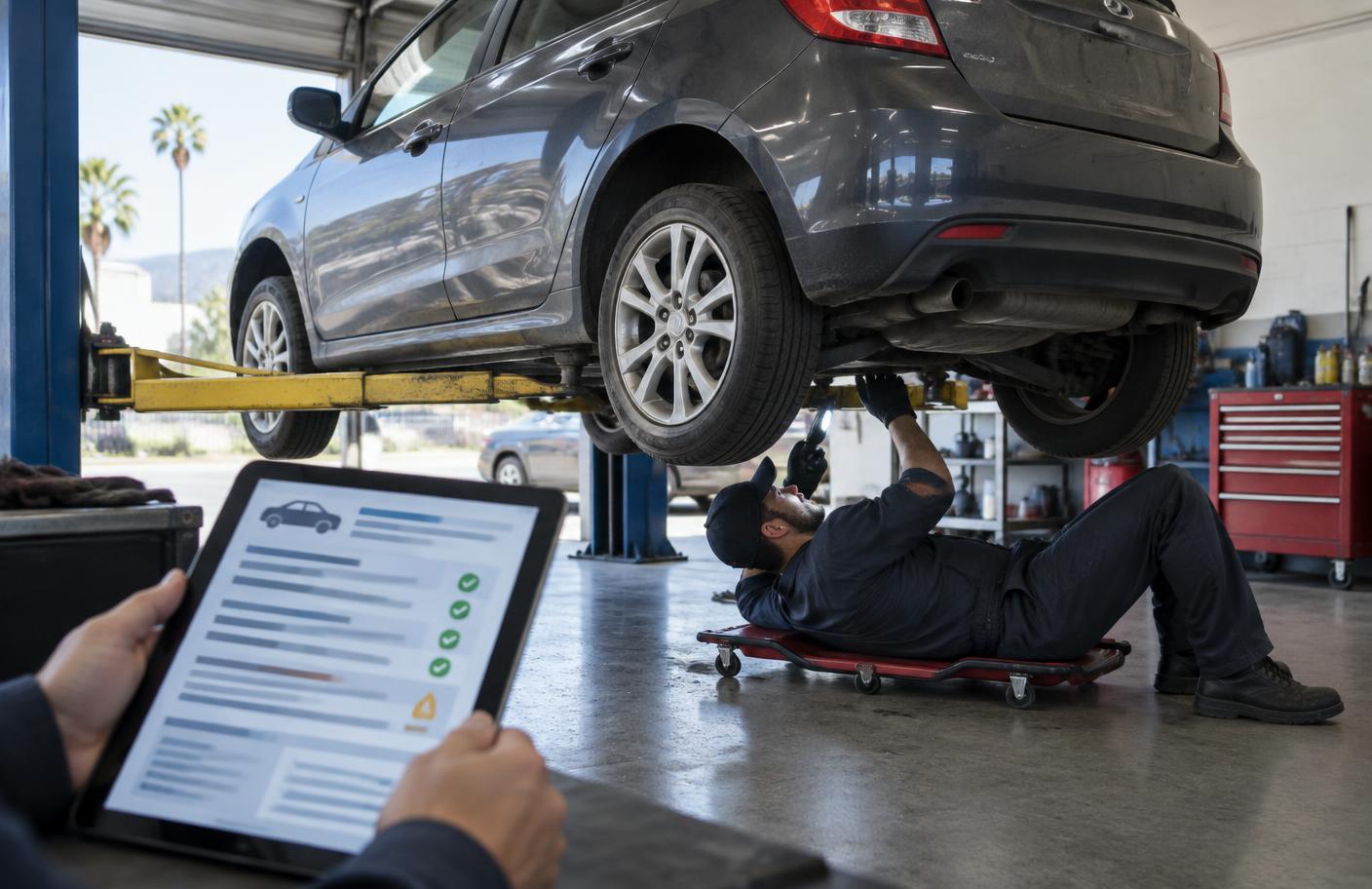
A pre-purchase inspection does the other half. An independent mechanic — not the seller's, and ideally one who knows that make — puts the car on a lift and tells you its condition now: brakes, tyres, suspension, leaks, evidence of repair, stored fault codes, the state of the things that are expensive.
Buy both. Together they cost a small fraction of what they routinely save. And if a seller will not permit an independent inspection, that refusal is itself the finding.