How to spot prior accident damage
A repaired car isn't automatically a bad car. A repair nobody tells you about is the problem.
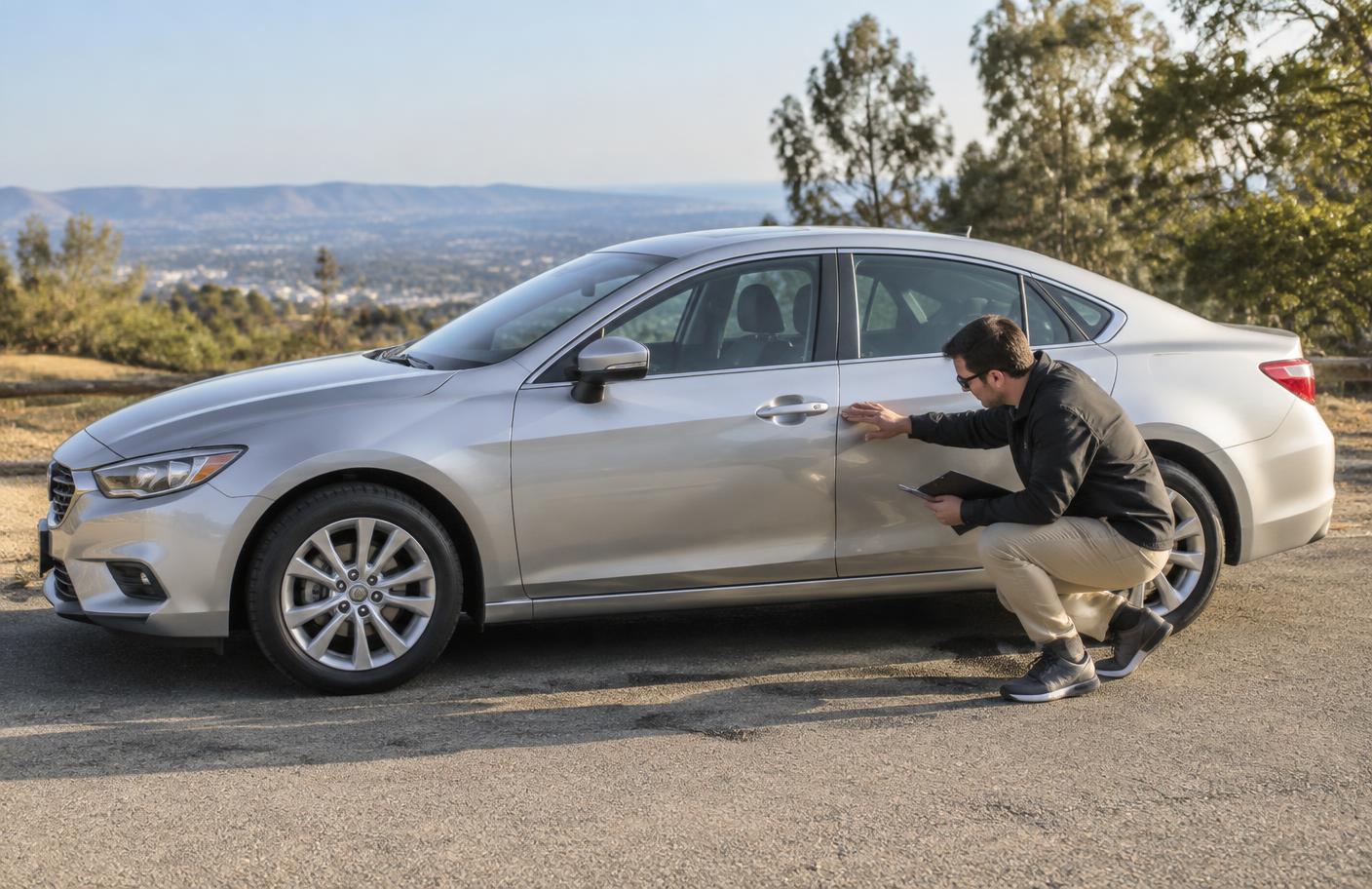
Most cars of any age have been touched. The point of looking is not to find a perfect car but to know what you are buying and to price it correctly.
Start with the gaps. Panel gaps on a factory car are even and consistent side to side. A bonnet that sits proud at one corner, a door gap that tapers, a bumper whose line does not meet the wing — these are alignment clues, and alignment is what gets lost in a repair.
Then the paint. Look along the panels at a shallow angle in daylight. Repainted panels often differ subtly in texture or metallic flake from their neighbours, and the difference shows at an angle before it shows head on. Check for overspray on rubber seals, on the underside of the bonnet edge, and in the door shuts.
Then the bolts. Bonnet, wing and door hinge bolts leave paint marks when they are loosened. Clean, unmarked bolts are original; scuffed ones have been turned.
Then underneath and behind. Look at the boot floor and the spare wheel well for ripples, at the inner wings for crumpled and straightened metal, at the radiator support for replacement.
None of this replaces an inspection by someone who does it daily. It does tell you whether to pay for one.