
Service history is the cheapest signal on a used car
The service records can tell you more about a used car than shiny paint ever will.
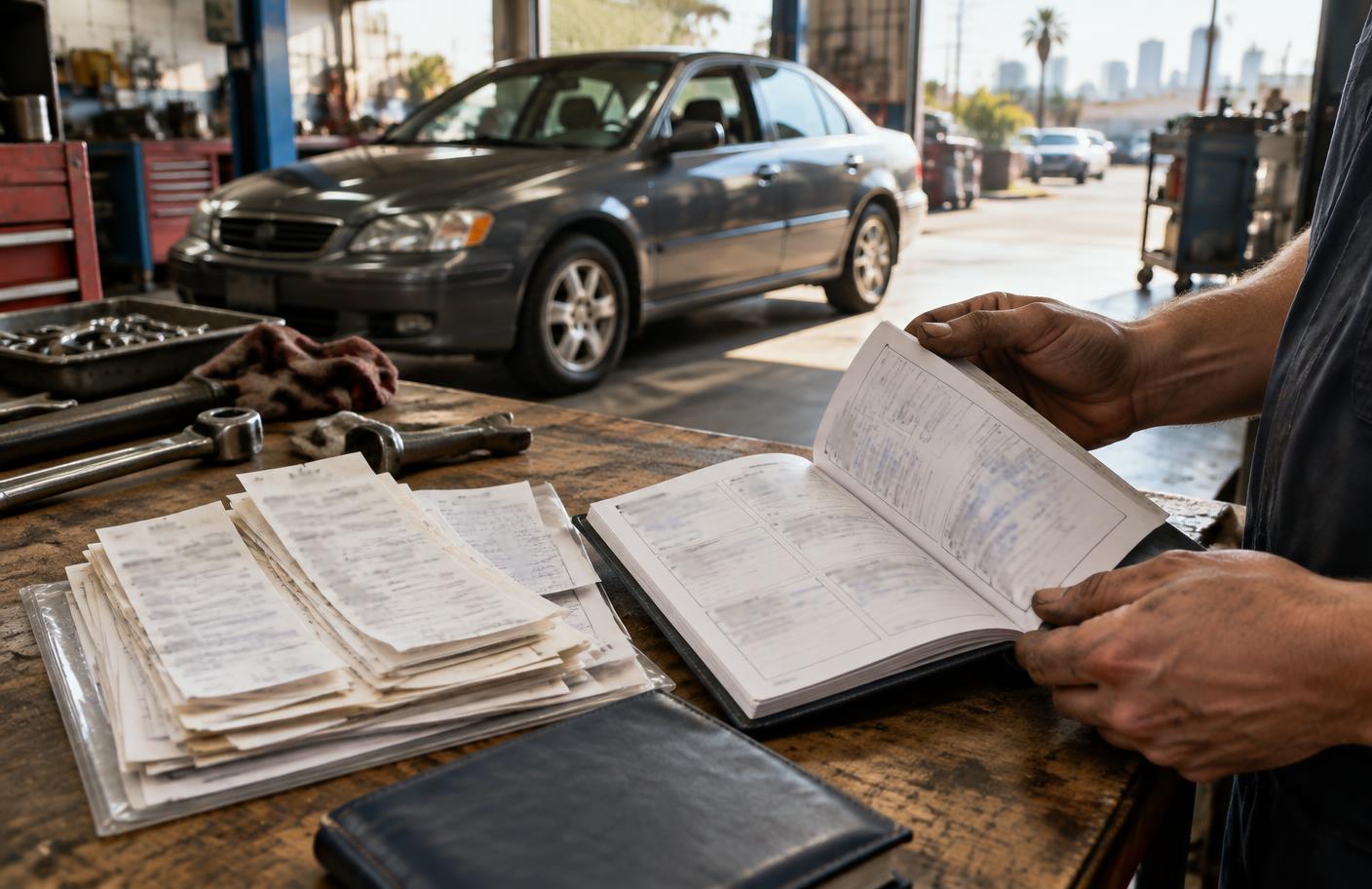
Buyers inspect bodywork and ignore paperwork, which is backwards. A car's maintenance record predicts its next two years better than its appearance does.
What you want is continuity. Regular oil services at sensible intervals, the major scheduled services actually performed at the mileages the manufacturer specifies, and no long silent gaps. A gap is not automatically bad — the owner may have used an independent shop that does not report — but it is a question to ask.
What you want specifically depends on the car. Timing belts have replacement intervals and are expensive to ignore. Transmission services are skipped constantly and quietly. On a turbocharged engine, oil interval discipline matters more than it does on a naturally aspirated one. On a car with air suspension, ask whether anything has been replaced and when.
Where to find it: the manufacturer's own service records, retrievable by VIN at a franchised dealer, are better than any commercial report, because they show what was done rather than what was reported. Ask the seller to pull it, or ask a dealer of that make to.
A car with complete records and visible wear is usually a better buy than an immaculate one with nothing behind it.