
Water damage: how to recognise a drowned engine
Rare, catastrophic, and usually visible to someone who knows where to look.
An engine that has drawn water into its cylinders is destroyed in a way that is not always obvious from the driver's seat. Water does not compress, so a cylinder full of it bends or breaks the connecting rod on the next stroke. The car may still run afterwards, badly, or it may not turn over at all.
For a buyer, the question is whether a car has been in deep water at all, because an engine is only one of the things ruined by it.
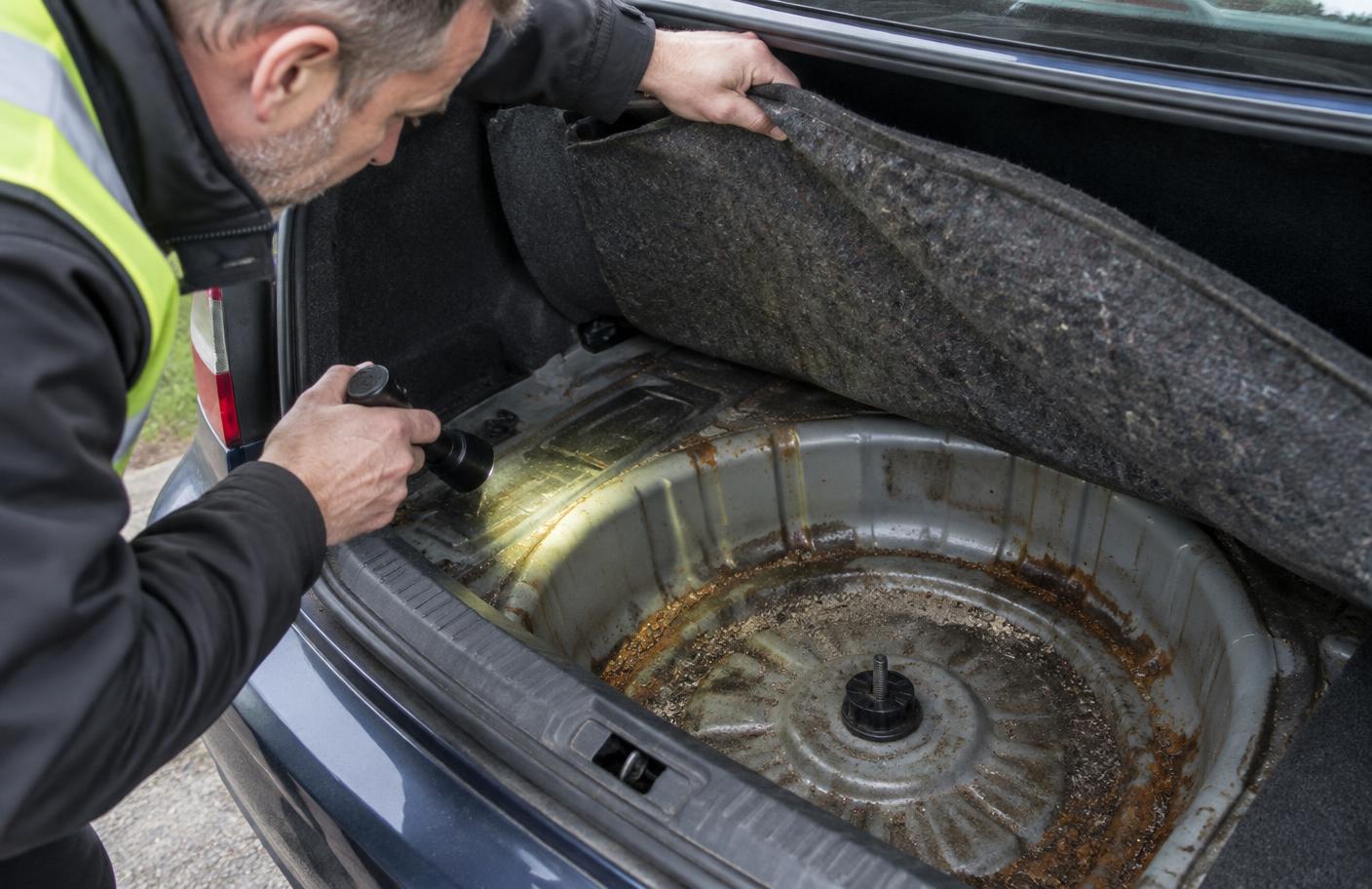
Look for a tide line. Silt or a faint discoloured band low in the boot, under the carpets, inside the spare wheel well, along the lower seat rails and inside the door bottoms.
Smell it. Damp, mould, or an aggressive air freshener covering something.
Check the electrics comprehensively, because water damage in wiring appears months later as faults that nobody can trace. Work every window, every seat motor, every light, the infotainment and the climate control.
Look at the fasteners and brackets under the carpet and in the boot for rust that does not match the car's age or region.
A history report may show a flood title, and that is worth checking, but a car moved between states and retitled can lose the record. Nothing replaces looking.